


How to Build Web Apps That Users Actually Love
Building web apps that users actually enjoy starts with understanding what people expect the moment they land on your product.
Today’s users want speed, clarity, and experiences that feel effortless. They are not patient — research from Forrester indicates
that brands delivering superior digital experiences can grow revenue up to five times faster than laggards.
This is where strong web apps development services make all the difference. When your product feels intuitive, fast, and dependable across devices, users stay longer, engage deeper, and return more often. Whether you are working with a web app development company in India, scaling a product globally, or crafting a new idea from scratch, the standards remain the same: build purposefully, validate often, and optimize continuously.
Why User Love Matters in Modern Web Apps Development
Today’s users judge every product against the best apps they use — whether that’s Netflix, Slack, or Notion. They subconsciously expect:
- Predictable flows
- Ultra-fast loading
- Zero confusion
- Stable performance
- Intuitive navigation
When these elements break, users disappear silently.
A web app is not just a functional tool; it is often your brand’s first impression. With the right approach to web and app development, even a simple workflow can feel premium.
Brands that invest in thoughtful experiences win more trust and outperform competitors. A well-designed user experience (UX) can increase conversion by up to 200%, and that impact compounds over time. Whether you are exploring custom web app development services, deciding between web development vs app development, or expanding into web and mobile app development, the goal remains the same — deliver an experience your users simply enjoy coming back to.
Core Pillars of User-Centered Web & Mobile Apps Development
1. In-depth user-centered design backed by structured research
Go beyond surface-level interviews. Use methods such as:
- Task analysis
- Contextual user observation
- Motivational mapping
- User journey friction scoring
These techniques eliminate guesswork and uncover what users actually want from your app.
2. Analytics-driven feature prioritization
Instead of building everything at once, rely on:
- Heatmaps
- Funnel drop-off data
- Prototype success rates
- Cost–impact prioritization frameworks
This approach ensures you ship high-value features first and avoid the classic bloat that slows product velocity.
3. Responsive, accessible, and lightning-fast experiences
Modern users expect sub-three-second load times, device-aware UI, and seamless navigation across breakpoints. Speed directly impacts conversion, engagement, and retention.
4. Continuous improvement powered by feedback loops
Successful apps use real-time data to monitor behavior, identify friction, and iterate weekly — not yearly. Continuous optimization keeps your web and mobile app development aligned with evolving user needs.
Advanced Step-by-Step Guide to Building Web Apps That Users Love
Step 1: Deep discovery and user research
Begin by understanding real user behavior through observation and journey mapping. This reveals motivations, pain points, and expectations that shape stronger and more focused web app development services.
Step 2: Validate and prioritize with data
Translate insights into a clear feature plan using models such as RICE or ICE. Create quick prototypes, test with real users, and refine early. This ensures your web app development company invests time where it creates maximum value.
Step 3: Choose the right tech stack
Select technologies with long-term scalability in mind. Frameworks and tools like React, Next.js, Node.js, Django, Postgres, and MongoDB help build fast, reliable, and future-ready products. These decisions become the backbone of successful web and app development.
Step 4: Design for speed, clarity, and accessibility
Interfaces should feel light, intuitive, and effortless. Keep screens clean, interactions predictable, and performance tightly optimized. Integrate accessibility from the start to improve reach and elevate your web and mobile app development results.
Step 5: Build for scalability, stability, and security
Engineering discipline sets great apps apart. Prioritize clean API structures, caching strategies, automated deployments, and strong security practices. This level of rigor supports dependable custom web app development services.
Step 6: Test for real-world conditions
Not all users have fast networks or powerful devices. Test for low bandwidth, latency, older browsers, and accessibility scenarios. These checks are especially relevant when comparing Android app development vs web development environments.
Step 7: Launch, monitor, and improve continuously
After launch, monitor how users interact with your app. Look for confusing screens, drop-offs, or unexpected behavior patterns. The best web app development agencies treat improvement as a continuous cycle and evolve the product weekly.
Expert Tips & Best Practices From Web App Development Agencies
Create flows that feel effortless
The best products guide users without explanation. If a basic task requires tooltips or extra instructions, the flow needs simplification. Aim for interactions that feel natural from the first click.
Reduce cognitive load without limiting features
Users make better decisions when information is structured clearly. Group tasks in a logical order, keep visual hierarchy consistent, and remove unnecessary mental steps. This creates smoother engagement across your web development apps.
Use personalization to increase retention
People stay longer when the experience adapts to their needs. Dynamic dashboards, contextual suggestions, and tailored content improve daily usage and give your web app development services a competitive edge.
Avoid early overengineering
Introduce sophistication only when the product has proven demand. Start with modular components, simple architecture, and clear data flows. This keeps development nimble and supports scalable custom web app development services later.
Design for failure states with intention
Every app breaks at some point, and the way it fails matters. Helpful error messages, automatic retries, offline fallback, and background autosave features build trust and keep users moving even in imperfect conditions.
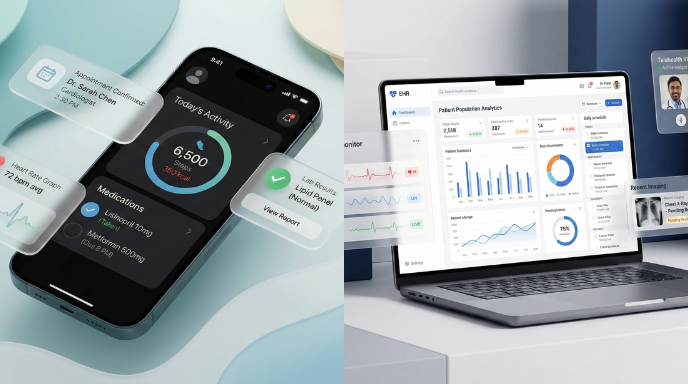
Web Development vs Apps Development
Understanding the differences between web development and app development helps you choose the right approach for your product.
| Factor | Web Development | App Development |
|---|---|---|
| Access | Browser-based | Requires installation |
| Updates | Instant for all users | OS-dependent |
| Performance | Fast with modern stacks | Faster for complex tasks |
| Reach | Universal | Platform-specific |
| Cost | Lower | Higher |
Best Web App Development Languages & Tech Stacks
Top languages dominating modern custom web app development include:
- JavaScript / TypeScript – universal, fast, and ecosystem-rich
- Python – ideal for logic-heavy apps and rapid development
- Go – exceptional performance for scalable services
- Rust – rising choice for secure, high-speed systems
Popular frameworks for building high-quality web apps include:
- Next.js
- NestJS
- Django
- Express
- FastAPI
Final Thoughts
Building web apps users love requires balancing design, engineering discipline, and feedback-driven evolution. Businesses that invest in user-centered, scalable solutions — whether through internal teams or a trusted web app development agency — see stronger engagement, lower churn, and measurable business growth.
Your web app is not just a product. It is an experience. And users reward great experiences.
Stat Source: Forrester 2024 CX Index Report – Forrester CX Index 2024
FAQs
1. What makes a web app truly user-centered?
A user-centered web app is built around real user behavior, not assumptions. It relies on structured research such as task analysis, contextual observation, and user journey mapping to understand motivations and friction points. These insights drive decisions about features, navigation, and interface design so the experience feels intuitive, fast, and effortless from the first visit.
2. How do web app development services improve user engagement and retention?
Professional web app development services improve engagement and retention by combining UX research, performance optimization, and data-driven iteration. They design predictable flows, optimize loading speeds, and use analytics to refine features over time. Personalization, clear information architecture, and stable performance across devices all encourage users to stay longer and return more often.
3. Why is speed so important in modern web app development?
Speed directly affects user satisfaction, conversion rates, and search visibility. Modern users expect sub-three-second load times on both desktop and mobile. Slow pages cause higher bounce rates and lost revenue. By optimizing code, assets, caching, and server responses, web app development teams can deliver lightning-fast experiences that support stronger engagement and business growth.
4. How should I choose the right tech stack for my web app?
Choose a tech stack based on long-term scalability, performance, team expertise, and ecosystem support. Popular choices include JavaScript or TypeScript with frameworks like React and Next.js on the front end, and Node.js, Django, or FastAPI with databases like Postgres or MongoDB on the back end. A good web app development company will assess your product goals and recommend a stack that balances speed of development, maintainability, and future growth.
5. What is the difference between web development and app development for my product strategy?
Web development focuses on browser-based experiences that are instantly accessible and easy to update for all users. App development creates platform-specific applications that require installation but can offer deeper integration with device capabilities and often higher performance for complex tasks. Many businesses start with web app development for reach and cost efficiency, then add native apps once they validate demand and identify platform-specific opportunities.