


Performance Testing vs. Security Testing: What’s More Important for Your Software?
Understanding the Importance of Software Testing
Ensuring the reliability and security of software is critical for businesses aiming to provide seamless user experiences. Among the many testing methodologies, performance testing and security testing stand out as essential components of software quality assurance. While both serve different purposes, they play a crucial role in determining the software’s stability, efficiency, and safety.
What is Performance Testing?
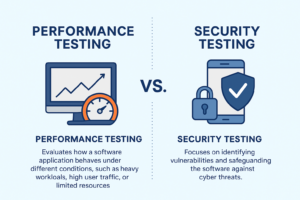
Performance testing evaluates how a software application behaves under different conditions, such as heavy workloads, high user traffic, or limited resources. The goal is to ensure the system remains responsive, scalable, and reliable under varying circumstances.
Performance testing evaluates how a software application behaves under different conditions such as heavy workloads and high user traffic. In fact, over 80% of organizations include performance testing as part of their QA process to ensure reliability and responsiveness.
Key Aspects of Performance Testing:
- Load Testing: Determines how the software performs under expected user loads.
- Stress Testing: Evaluates system behavior under extreme conditions.
- Scalability Testing: Assesses the software’s ability to scale with increased users or data.
- Stability Testing: Ensures long-term performance consistency.
What is Security Testing?
Security testing focuses on identifying vulnerabilities and safeguarding the software against cyber threats. With increasing cyber risks, ensuring that an application is protected against breaches is more important than ever.
Key Aspects of Security Testing:
- Penetration Testing: Simulates real-world attacks to find vulnerabilities.
- Authentication Testing: Ensures that only authorized users can access the system.
- Data Protection Testing: Checks encryption, access controls, and data privacy mechanisms.
- Compliance Testing: Ensures adherence to security regulations and standards.
Performance vs. Security Testing: Which Matters More?
Both performance and security testing are essential for software success, but their importance depends on the nature of the application:
- For high-traffic applications (e.g., e-commerce, banking, SaaS platforms): Performance testing is crucial to maintaining a smooth user experience under heavy loads.
- For sensitive data applications (e.g., healthcare, finance, government services): Security testing takes priority to protect confidential information.
- For mission-critical applications (e.g., cloud platforms, enterprise software): A balanced approach is necessary to ensure both stability and security.
How AcmeMinds Helps Businesses Achieve Software Excellence
AcmeMinds specializes in delivering comprehensive software testing services, ensuring that both performance and security aspects are optimized for maximum efficiency.
1. Advanced Performance Testing Solutions
AcmeMinds leverages cutting-edge tools and methodologies to simulate real-world usage scenarios, ensuring that applications remain stable and responsive.
- Load and Stress Testing: Simulates extreme conditions to measure system endurance.
- Cloud-Based Performance Testing: Ensures scalability and flexibility.
- Continuous Performance Monitoring: Identifies potential bottlenecks and optimizes system performance.
2. Robust Security Testing Services
With a team of security experts, AcmeMinds helps businesses safeguard their applications against cyber threats.
- Penetration Testing: Identifies vulnerabilities before hackers exploit them.
- Data Security & Encryption Testing: Ensures compliance with industry standards.
- Real-Time Security Audits: Provides continuous threat monitoring and mitigation.
3. Customized Testing Strategies
AcmeMinds tailors its testing approach based on industry-specific requirements, ensuring that businesses get the best of both performance and security testing.
- Industry-Specific Compliance Testing for healthcare, fintech, and enterprise software.
- Integrated DevOps Testing to enable continuous testing throughout development cycles.
4. Scalable & Cost-Effective Testing Solutions
AcmeMinds ensures that businesses of all sizes can access top-tier testing services without exceeding their budgets.
- On-Demand Testing Services: Allows businesses to scale testing efforts as needed.
- Automated & Manual Testing: Provides a balanced approach for faster, more efficient results.
By combining expertise in performance and security testing, AcmeMinds helps businesses build resilient, high-performing, and secure applications, ensuring success in today’s competitive digital landscape.
Final Thoughts on Performance and Security Testing
Performance testing and security testing are critical to building reliable, scalable, and secure software applications. High-performing systems without security controls expose businesses to risk, while secure applications with poor performance fail to meet user expectations. Modern software testing strategies must address both.
Choosing the right mix of manual testing and automated testing also plays a key role in software quality assurance. Teams need speed, accuracy, and flexibility across the development lifecycle. To understand how different testing approaches impact performance, security, and delivery timelines, explore our detailed guide on Manual vs Automated Testing.
At AcmeMinds, we help businesses implement performance testing, security testing, and QA strategies that support growth, compliance, and long-term reliability.
Stat Source: Testing Industry Statistics
FAQs
1. What is the main difference between performance testing and security testing?
Performance testing focuses on application speed, scalability, and stability under load. Security testing focuses on identifying vulnerabilities and protecting applications from cyber threats.
2. Why is performance testing important for modern applications?
Performance testing ensures applications remain fast and responsive during high traffic, peak usage, and real-world workloads. It helps prevent crashes, bottlenecks, and poor user experience.
3. Why is security testing critical in software development?
Security testing helps detect vulnerabilities early, protects sensitive data, prevents security breaches, and ensures compliance with industry standards and regulatory requirements.
4. Should performance testing and security testing be done together?
Yes. Performance and security testing should be integrated into the software testing lifecycle to ensure applications remain reliable, scalable, and protected as they grow.
5. What tools are commonly used for performance and security testing?
Performance testing tools include JMeter, LoadRunner, and Gatling. Security testing tools include OWASP ZAP, Burp Suite, and penetration testing frameworks.
6. How do manual and automated testing support performance and security testing?
Manual testing supports exploratory and usability scenarios. Automated testing ensures consistent performance validation and continuous security checks across frequent releases.