

How to Transform Patient Data with Clinical Intelligence platform
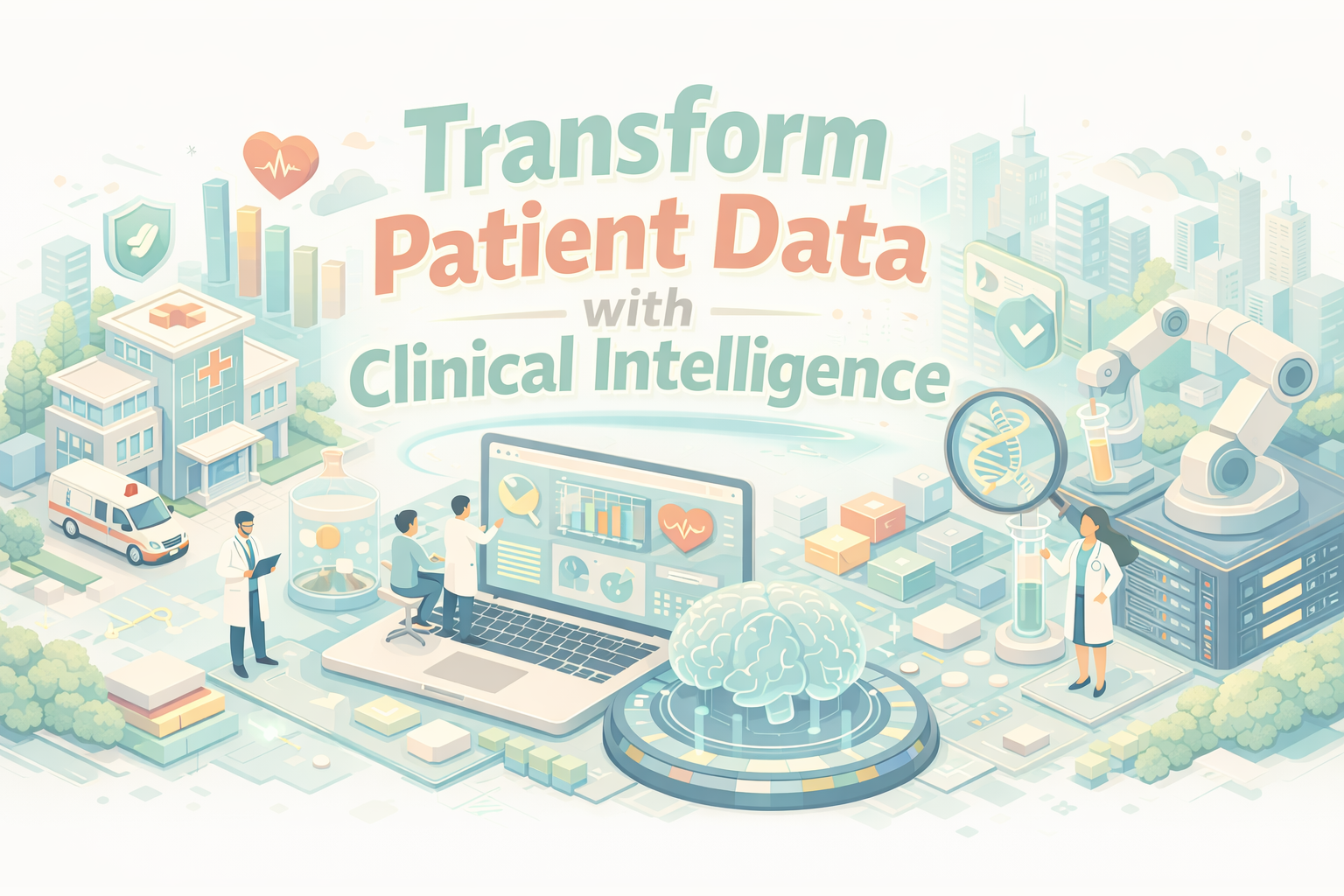
Healthcare organizations today face an unprecedented challenge: managing and making sense of vast amounts of patient data. Electronic health records, lab results, prescriptions, imaging studies, and more generate terabytes of information daily. However, this data is often siloed, fragmented, and difficult to leverage effectively. Enterprise Clinical Intelligence Platforms (ECIPs) are designed to address this challenge, turning raw data into actionable insights that improve patient outcomes, operational efficiency, and clinical decision-making.
Introduction to Enterprise Clinical Intelligence Platforms
Enterprise Clinical Intelligence Platforms are specialized software systems that consolidate, analyze, and visualize patient data across healthcare organizations. Unlike traditional EHR systems, which primarily store patient records, ECIPs transform this data into actionable insights. These platforms enable clinicians and hospital administrators to make faster, smarter, and more informed decisions.
Challenges in Healthcare Data Management
Healthcare data management is complex due to several factors:
- Data fragmentation: Patient information is spread across multiple systems, making it difficult to access a complete medical history.
- Data volume: Hospitals generate massive amounts of structured and unstructured data daily.
- Data accuracy: Inconsistent or incomplete records can lead to errors in clinical decision-making.
- Regulatory compliance: Managing sensitive health data requires strict adherence to HIPAA and other regulations.
Without a unified solution, clinicians often rely on incomplete data, leading to delayed diagnoses, inefficiencies, and increased risk.
Key Features of ECIPs
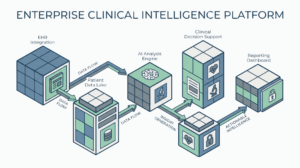
Enterprise Clinical Intelligence Platforms include several core features designed to solve these challenges:
EHR Integration
ECIPs connect seamlessly with multiple Electronic Health Record systems, enabling a unified view of patient data across departments and facilities. This integration eliminates data silos and ensures clinicians have access to complete medical histories.
Patient Data Lake
A centralized, secure repository stores all patient-related information, including structured and unstructured data. Data lakes facilitate efficient querying and support advanced analytics without compromising compliance and security.
AI Analysis Engine
Advanced artificial intelligence and machine learning algorithms analyze complex datasets to identify patterns, trends, and anomalies. The engine supports predictive analytics for patient outcomes, risk stratification, and population health management.
Clinical Decision Support
ECIPs convert data insights into actionable recommendations for healthcare providers. This includes alerts for potential adverse events, guidance on treatment plans, and suggestions for preventive care measures.
Reporting Dashboard
Interactive dashboards provide administrators and clinicians with visual summaries and performance metrics. Reports track patient outcomes, resource utilization, and operational efficiency, supporting data-driven management decisions.
Benefits of Implementing ECIPs
Healthcare organizations adopting ECIPs gain multiple advantages:
- Improved patient care: Clinicians receive timely insights to support accurate diagnoses and personalized treatment plans.
- Risk prediction: Predictive analytics identify patients at risk for complications or readmissions.
- Operational efficiency: Administrators optimize staffing, resource allocation, and workflow management.
- Data-driven decisions: Hospitals leverage actionable insights rather than relying solely on intuition or fragmented reports.
- Regulatory compliance: Secure data management supports HIPAA and other healthcare regulations.
According to a 2025 study by Healthcare IT News, hospitals using clinical intelligence platforms reported a 20% reduction in preventable medical errors and a 15% improvement in operational efficiency.
Key Considerations for Choosing an ECIP
When selecting an Enterprise Clinical Intelligence Platform, healthcare organizations should evaluate:
- Integration capabilities with existing EHR systems
- Data security and compliance features
- Scalability to handle growing patient data volumes
- AI and analytics sophistication
- User experience for clinicians and administrators
Choosing the right platform ensures maximum ROI, improved patient outcomes, and seamless adoption by healthcare teams.
Use Case: Enhancing Patient Experience
One concrete example of how clinical intelligence and integrated patient feedback systems deliver actionable value is Patient Xperience Boost PXB Boost – a project delivered by AcmeMinds that illustrates the real-world application of clinical insights technology.
Objective
The goal of PXB was to create a streamlined, secure mechanism for hospitals to capture real-time patient feedback via a mobile application, connect this feedback with hospital workflows, and enable clinical and administrative teams to analyze trends and take corrective actions. This approach transforms traditional patient satisfaction surveys into actionable analytics, strengthening care delivery and provider responsiveness.
Bidirectional Feedback Loop
Patients can provide instant feedback through a user‑friendly mobile app. Clinicians and hospital staff can access this feedback, respond promptly, and track sentiment trends in a secure dashboard. This bidirectional loop ensures patient voices are heard and translated into actionable improvements in care delivery.
Integration with EMR Systems
PXB addresses a common challenge in healthcare IT by ensuring patient engagement data aligns with existing Electronic Medical Records (EMRs). This integration improves clinical context, allowing care teams to make more informed decisions while maintaining workflow continuity.
Insightful Dashboards for Staff
Hospital staff are provided with visual dashboards displaying key performance indicators, satisfaction metrics, and trend lines. These dashboards enable teams to prioritize interventions, identify areas for improvement, and reduce negative patient experiences effectively.
Mobile and Web Access
PXB offers responsive access for both patients and providers. Patients use a native mobile app interface for convenience, while clinicians access a web application optimized for reviewing data and generating operational insights. This flexibility ensures engagement from all stakeholders and seamless information flow.
Impact on Healthcare Delivery
By bridging patient input with clinical workflows and analytics, PXB demonstrates the practical value of Enterprise Clinical Intelligence Platforms. It allows healthcare organizations to capture real-time feedback, reduce friction between patient sentiment and clinical action, empower care teams with consolidated insights, and shorten response times to service issues. Clinical intelligence, therefore, extends beyond traditional analytics and actively enhances patient experience, operational transparency, and care quality.
Conclusion
Enterprise Clinical Intelligence Platforms are essential tools for healthcare organizations striving to deliver better patient care, optimize operations, and make data-driven clinical decisions. By unifying patient data, leveraging AI-powered analytics, and providing actionable insights, ECIPs empower hospitals and clinics to predict risks, improve outcomes, and operate more efficiently.
For healthcare organizations looking to implement advanced clinical intelligence solutions, AcmeMinds’ PXB Boost demonstrates how innovative platforms can transform patient data into actionable insights, driving smarter decisions across the care continuum.
FAQs
1. What is an Enterprise Clinical Intelligence Platform?
An Enterprise Clinical Intelligence Platform is a software system that consolidates and analyzes patient data from multiple clinical and operational sources to deliver actionable insights for clinicians, care teams, and hospital administrators.
2. How do Enterprise Clinical Intelligence Platforms improve patient care?
By providing timely, data driven insights, ECIPs support more accurate diagnoses, personalized treatment plans, early risk detection, and proactive care strategies that improve patient outcomes.
3. Can ECIPs integrate with existing EHR systems?
Yes. Modern Enterprise Clinical Intelligence Platforms are designed to integrate seamlessly with existing EHR and EMR systems, reducing data silos and improving clinical and administrative workflow efficiency.
4. Are Enterprise Clinical Intelligence Platforms secure and HIPAA compliant?
Leading ECIPs implement strong security controls such as data encryption, access controls, audit logging, and compliance features to ensure patient data is stored and processed in accordance with HIPAA and other healthcare regulations.
5. How do ECIPs help hospitals predict patient and operational risks?
Using AI powered analytics and predictive modeling, ECIPs identify patterns and trends in clinical and operational data that signal potential risks, enabling early intervention and proactive care management.
6. What is the ROI of implementing an Enterprise Clinical Intelligence Platform?
Hospitals using ECIPs report improved patient outcomes, better operational efficiency, reduced preventable medical errors, and optimized resource utilization, leading to measurable cost savings and higher care quality.